
7.1 Overview of AI Lifecycle Governance
7.2 Righteous AI Development Practices
7.3 Data, Model, and Algorithm Governance
7.4 Organizational AI Governance Structure
7.5 RAGF Developer Assessment Methodology
7.6 RAGF Organization Assessment Methodology
7.7 Developer and Organization Righteousness Maturity Levels
7.8 Righteousness Diagnosis: Assessing Gaps and Opportunities
Part III — RAGF Across the AI Lifecycle
Chapter 7: Generation 1 — AI Development and Organizational Governance
7.1 Overview of AI Lifecycle Governance
The first generation of AI governance addresses the creation and deployment of AI systems. This is where righteousness must be embedded from the beginning—before AI systems are deployed, before they interact with users, and before they make autonomous decisions.
Generation 1 governance covers two interconnected domains:
Table 1 — Generation 1 Governance Domains
| Domain | Focus | Key Stakeholders |
|---|---|---|
| AI Development | How AI systems are designed, built, and tested | AI developers, data scientists, engineers, product managers |
| Organizational Governance | How organizations govern AI deployment and use | Executives, compliance officers, AI governance leads, legal teams |
Why Generation 1 Matters
Righteousness is most effectively achieved when it is built in, not bolted on. If righteousness is embedded during development and reinforced through organizational governance, it becomes a natural part of the AI lifecycle rather than an afterthought.
The Generation 1 Lifecycle
Key Principle
Righteousness cannot be achieved through governance alone, nor through development alone. It requires both — embedded in development and reinforced through organizational governance.
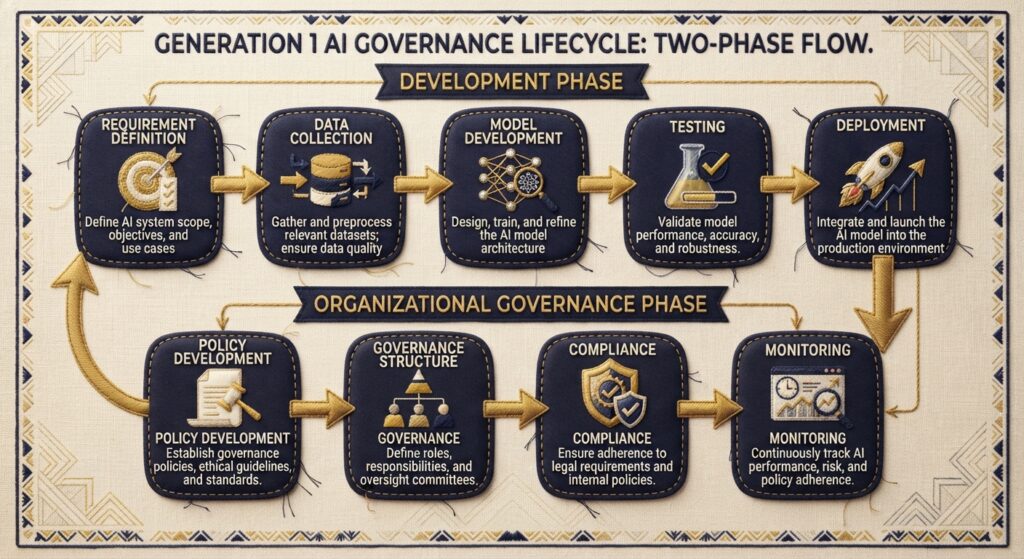
Figure 7.1 — Generation 1 Governance Lifecycle
This figure illustrates the two-phase Generation 1 governance lifecycle: the Development Phase (requirement definition, data collection, model development, testing, deployment) and the Organizational Governance Phase (policy development, governance structure, compliance, monitoring).
7.2 Righteous AI Development Practices
Righteous development practices ensure that AI systems are built with integrity, fairness, and accountability from the very beginning.
Core Principles for Righteous Development
This table 2 outlines the five core principles for righteous AI development, including their description and practical application.
Table 2 — Core Principles for Righteous Development
| Principle | Description | Application |
|---|---|---|
| Purpose-Driven Design | AI should be designed with a clear righteous purpose | Define the social and ethical purpose before technical requirements |
| Value-Aligned Data | Training data should reflect righteous values | Ensure data is representative, fair, and free from harmful bias |
| Transparent Development | Development processes should be open and auditable | Document decisions, assumptions, and trade-offs |
| Testing for Righteousness | Testing should include righteousness criteria | Test for bias, deception, fairness, and transparency |
| Human-Centered Design | AI should serve human needs and dignity | Involve diverse stakeholders in design and testing |
Righteous Development Practices by Stage
The table 3 outlines specific righteous development practices for each stage of the AI development lifecycle.
Table 3 — Righteous Development Practices by Stage
| Stage | Righteous Practice | Why It Matters |
|---|---|---|
| Requirement Definition | Define ethical requirements alongside technical requirements | Ensures righteousness is prioritized from the start |
| Data Collection | Assess data for bias, representativeness, and fairness | Prevents bias from being embedded in the model |
| Model Development | Document design choices and their ethical implications | Creates transparency and accountability |
| Testing | Conduct bias, fairness, and deception testing | Identifies righteousness failures before deployment |
| Deployment | Establish monitoring and feedback mechanisms | Enables continuous righteousness oversight |
Key Development Practices
This table 4 outlines the key development practices for embedding righteousness into AI development, including description and implementation guidance.
Table 4 — Key Development Practices
| Practice | Description | Implementation |
|---|---|---|
| Righteousness by Design | Incorporate righteousness principles into the design phase | Use the Five Pillars as design requirements |
| Ethical Review Boards | Establish review processes for AI development | Include diverse perspectives in ethical review |
| Bias Audits | Regularly test models for bias | Conduct pre-deployment and ongoing bias testing |
| Transparency Documentation | Document all development decisions | Create auditable records of design choices |
| Stakeholder Engagement | Involve affected communities in development | Conduct user research and community consultation |
Key Insight: Righteous development is not a separate activity—it is integrated into every stage of development.
7.3 Data, Model, and Algorithm Governance
Data, models, and algorithms are the technical building blocks of AI systems. Righteousness in these components is essential for overall AI righteousness.
Data Governance
Data governance ensures that training data is fair, representative, and free from harmful bias.
This table 5 outlines the key dimensions of data governance for righteous AI, including assessment questions and best practices.
Table 5 — Data Governance for Righteous AI
| Dimension | Assessment Question | Best Practice |
|---|---|---|
| Representativeness | Does the data represent all affected groups? | Ensure diverse and inclusive data sources |
| Bias | Does the data contain harmful biases? | Conduct bias audits on training data |
| Privacy | Is personal data protected? | Implement privacy-preserving techniques |
| Consent | Was data collected with proper consent? | Document consent and usage rights |
| Quality | Is the data accurate and reliable? | Implement data quality standards |
Model Governance
Model governance ensures that AI models behave righteously in their predictions and decisions.
Table 6 — Model Governance for Righteous AI
| Dimension | Assessment Question | Best Practice |
|---|---|---|
| Performance | Does the model perform equally well across groups? | Test model performance across subgroups |
| Explainability | Can the model’s decisions be explained? | Use explainable AI techniques |
| Robustness | Does the model fail gracefully? | Test for edge cases and adversarial inputs |
| Value Alignment | Does the model align with righteous values? | Conduct value alignment testing |
Algorithm Governance
Algorithm governance ensures that the decision-making processes of AI systems are righteous.
Table 7 — Algorithm Governance for Righteous AI
| Dimension | Assessment Question | Best Practice |
|---|---|---|
| Fairness | Is the algorithm fair across groups? | Apply fairness constraints and corrections |
| Transparency | Is the algorithm’s logic transparent? | Document algorithm design and assumptions |
| Auditability | Can the algorithm’s decisions be audited? | Maintain audit trails of decisions |
| Accountability | Is there human accountability for algorithm outcomes? | Assign responsibility for algorithm performance |
This table 8 summarizes the governance requirements for data, models, and algorithms in righteous AI systems.
Table 8 — Data, Model, and Algorithm Governance Summary
| Component | Key Governance Requirements | RI Alignment |
|---|---|---|
| Data | Representativeness, fairness, privacy, consent, quality | Justice, Stewardship |
| Model | Performance equity, explainability, robustness, value alignment | Integrity, Wisdom |
| Algorithm | Fairness, transparency, auditability, accountability | Justice, Stewardship, Integrity |
7.4 Organizational AI Governance Structure
Organizational governance provides the structure, policies, and oversight that enable righteous AI.
Key Governance Elements
This table 9 outlines the key elements of an organizational AI governance structure, including roles, responsibilities, and oversight mechanisms.
Table 9 — Organizational AI Governance Structure
| Element | Description | Key Activities |
|---|---|---|
| Governance Board | Senior leadership oversight for AI governance | Set strategy, approve policies, review risks |
| AI Ethics Committee | Multi-stakeholder review of AI ethics | Review high-risk AI applications, provide ethical guidance |
| Compliance Function | Ensure adherence to policies and regulations | Monitor compliance, conduct audits, report violations |
| Risk Management | Identify and manage AI risks | Conduct risk assessments, implement controls |
| Technical Oversight | Review AI systems for technical righteousness | Conduct technical audits, review development practices |
| Stakeholder Engagement | Engage affected communities | Gather feedback, address concerns, ensure transparency |
Key Governance Responsibilities
Table 10 — Key Governance Responsibilities
| Responsibility | Description | Owner |
|---|---|---|
| Policy Development | Create and maintain AI governance policies | Governance Board + Legal |
| Risk Oversight | Identify and manage AI risks | Risk Management |
| Ethical Review | Review AI applications for ethical concerns | AI Ethics Committee |
| Compliance Monitoring | Ensure adherence to policies and regulations | Compliance Function |
| Stakeholder Communication | Communicate AI governance to stakeholders | Governance Board |
This table 11 outlines the key roles and responsibilities in organizational AI governance.
Table 11 — Organizational Governance Roles and Responsibilities
| Role | Responsibilities | Key Questions |
|---|---|---|
| CEO / Executive | Ultimate accountability for AI governance | “Are we governing AI righteously?” |
| AI Governance Lead | Coordinate AI governance activities | “Are all governance activities aligned?” |
| AI Ethics Committee | Provide ethical guidance and review | “Is this AI application ethical?” |
| Compliance Officer | Monitor compliance with policies | “Are we complying with policies and regulations?” |
| Risk Manager | Identify and manage AI risks | “What are our AI risks?” |
| Technical Lead | Ensure technical righteousness | “Is the AI system technically righteous?” |
7.5 RAGF Developer Assessment Methodology
The RAGF Developer Assessment evaluates the righteousness of AI development practices within an organization. It assesses whether development teams are embedding righteousness into their work.
Assessment Purpose
Table 12 — RAGF Developer Assessment Purpose
| Purpose | Description |
|---|---|
| Identify Gaps | Identify where development practices fall short of righteousness standards |
| Drive Improvement | Provide actionable recommendations for improvement |
| Track Progress | Measure improvement over time |
Assessment Dimensions
The RAGF Developer Assessment evaluates development practices across the Five Pillars:
This table 13 outlines the key assessment dimensions for evaluating AI developer righteousness, organized by the Five Pillars.
Table 13 — RAGF Developer Assessment Dimensions
| Pillar | Assessment Dimension | Key Questions |
|---|---|---|
| Integrity | Development Transparency | Are development processes transparent and documented? |
| Integrity | Truthful Documentation | Do documents accurately represent systems? |
| Justice | Bias Detection | Are bias tests conducted regularly? |
| Justice | Fair Data Practices | Is training data fair and representative? |
| Stewardship | Ethical Development Process | Is ethics integrated into development? |
| Stewardship | Governance Compliance | Do practices comply with policies? |
| Wisdom | Risk Assessment | Are risks identified and assessed? |
| Wisdom | Prudent Design | Are design choices made with foresight? |
| Beneficence | Social Impact Consideration | Is positive impact considered? |
| Beneficence | Environmental Impact | Is environmental impact considered? |
Assessment Process
This table 14 outlines the step-by-step process for conducting a RAGF Developer Assessment.
Table 14 — RAGF Developer Assessment Process
| Step | Activity | Output |
|---|---|---|
| 1 | Scoping | Define which development teams and projects to assess |
| 2 | Data Collection | Gather evidence on development practices |
| 3 | Evaluation | Score each assessment dimension |
| 4 | Analysis | Identify patterns, gaps, and opportunities |
| 5 | Recommendations | Develop actionable improvement recommendations |
| 6 | Reporting | Communicate results to stakeholders |
Assessment Outputs
Table 15 — RAGF Developer Assessment Outputs
| Output | Description |
|---|---|
| RI-D Score | Numerical score (0–100) for development righteousness |
| RI-U Score | Numerical score (0–100) for user righteousness |
| Pillar Scores | Scores for each of the Five Pillars |
| Gap Analysis | Identification of specific gaps and weaknesses |
| Recommendations | Actionable steps for improvement |
| Progress Tracking | Baseline for future assessments |
7.6 RAGF Organization Assessment Methodology
The RAGF Organization Assessment evaluates the righteousness of organizational AI governance. It assesses whether the organization has the policies, structures, and practices needed to govern AI righteously.
This table 16 outlines the four key purposes of the RAGF Organization Assessment: evaluating governance, identifying gaps, driving improvement, and tracking progress.
Table 16 — RAGF Organization Assessment Purpose
| Purpose | Description |
|---|---|
| Evaluate Governance | Assess the effectiveness of AI governance structures |
| Identify Gaps | Identify governance gaps and weaknesses |
| Drive Improvement | Provide recommendations for governance improvement |
| Track Progress | Measure governance improvement over time |
Assessment Dimensions
This table 17 outlines the key assessment dimensions for evaluating organizational AI governance, organized by the Five Pillars.
Table 17 — RAGF Organization Assessment Dimensions
| Pillar | Assessment Dimension | Key Questions |
|---|---|---|
| Integrity | Policy Transparency | Are policies transparent and accessible? |
| Integrity | Honest Communication | Does the organization communicate honestly about AI? |
| Justice | Fair Deployment | Are AI systems deployed fairly? |
| Justice | Equitable Outcomes | Do AI systems produce equitable outcomes? |
| Stewardship | Governance Structure | Is there a clear governance structure? |
| Stewardship | Accountability | Are roles and responsibilities clear? |
| Wisdom | Strategic Governance | Is governance aligned with strategy? |
| Wisdom | Risk Management | Are risks identified and managed? |
| Beneficence | Mission Alignment | Does AI serve the organizational mission? |
| Beneficence | Stakeholder Well-Being | Does AI consider stakeholder well-being? |
Assessment Process
This table 18 outlines the step-by-step process for conducting a RAGF Organization Assessment.
Table 18 — RAGF Organization Assessment Process
| Step | Activity | Output |
|---|---|---|
| 1 | Scoping | Define which organizational units to assess |
| 2 | Policy Review | Review AI governance policies and structures |
| 3 | Interviews | Interview key stakeholders and governance leads |
| 4 | Evaluation | Score each assessment dimension |
| 5 | Analysis | Identify patterns, gaps, and opportunities |
| 6 | Recommendations | Develop actionable improvement recommendations |
| 7 | Reporting | Communicate results to leadership |
7.7 Developer and Organization Righteousness Maturity Levels
RAGF defines maturity levels for both developers and organizations to track their progression in AI righteousness.
Developer Maturity Levels
This table defines the six maturity levels for AI developers, from unassessed to righteous development practices.
Table 19 — Developer Righteousness Maturity Levels
| Level | Name | RI-D Score Range | Characteristics |
|---|---|---|---|
| 0 | Unassessed | N/A | No development righteousness assessment has been conducted |
| 1 | Foundation | 0–19 | Basic awareness of righteousness; minimal practices in place |
| 2 | Developing | 20–39 | Some righteousness practices are being implemented |
| 3 | Proficient | 40–59 | Most righteousness practices are in place and followed |
| 4 | Advanced | 60–79 | Righteousness is actively cultivated and improved |
| 5 | Righteous | 80–100 | Exemplary development practices; righteousness is embedded in development culture |
Organization Maturity Levels
This table 20 defines the six maturity levels for organizations, from unassessed to righteous organizational governance.
Table 20 — Organization Righteousness Maturity Levels
| Level | Name | RI-O Score Range | Characteristics |
|---|---|---|---|
| 0 | Unassessed | N/A | No organizational governance assessment has been conducted |
| 1 | Foundation | 0–19 | Basic governance structures exist; righteousness is not systematically governed |
| 2 | Developing | 20–39 | Governance structures are being established; policies are emerging |
| 3 | Proficient | 40–59 | Governance structures are in place and functioning |
| 4 | Advanced | 60–79 | Governance is actively improved; righteousness is prioritized |
| 5 | Righteous | 80–100 | Exemplary governance; righteousness is embedded in organizational culture |
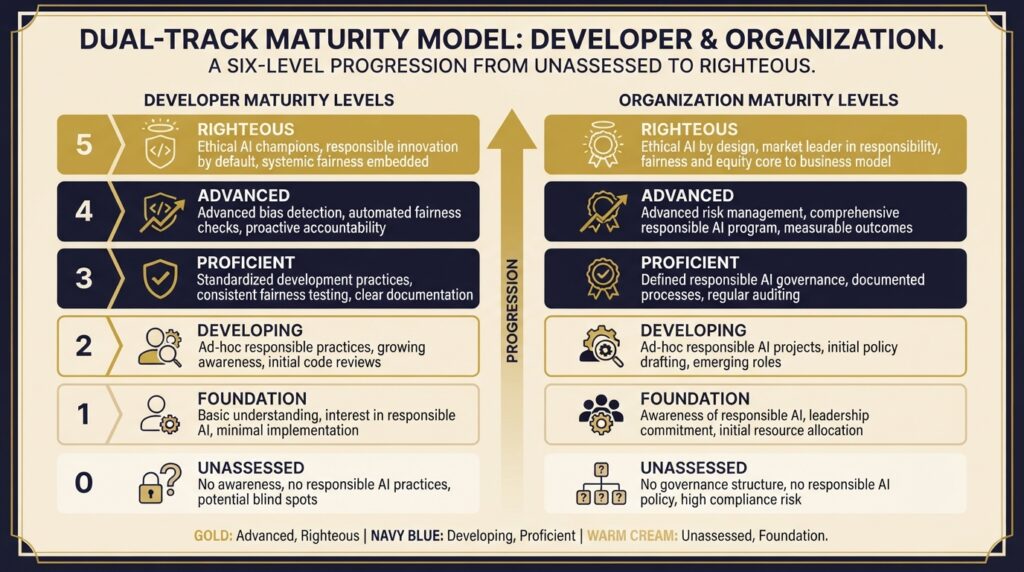
Figure 2 — Developer and Organization Maturity Levels
This figure presents the six maturity levels for both developers and organizations, showing the progression from unassessed (Level 0) to righteous (Level 5).
7.8 Righteousness Diagnosis: Assessing Gaps and Opportunities
The Righteousness Diagnosis is the process of identifying gaps between current and desired righteousness states and opportunities for improvement.
Diagnosis Purpose
Table 21 — Diagnosis Purpose
| Purpose | Description |
|---|---|
| Identify Gaps | Compare current state to desired righteousness standards |
| Prioritize Actions | Identify which gaps are most critical to address |
| Allocate Resources | Guide resource allocation to most impactful improvements |
| Track Progress | Establish baseline for measuring improvement |
Diagnosis Framework
The Righteousness Diagnosis evaluates gaps and opportunities across two dimensions:
This table 22 outlines the two-dimension diagnosis framework for assessing righteousness gaps and opportunities.
Table 22 — Righteousness Diagnosis Framework
| Dimension | Assessment Area | Key Questions |
|---|---|---|
| Development Gaps | AI development practices | Are development practices righteous? Where are the gaps? |
| Governance Gaps | Organizational governance | Are governance structures effective? Where are the gaps? |
| Opportunities | Improvement opportunities | What improvements would have the greatest impact? |
Diagnosis Process
This table 23 outlines the step-by-step process for conducting a Righteousness Diagnosis.
Table 23 — Righteousness Diagnosis Process
| Step | Activity | Output |
|---|---|---|
| 1 | Assess Current State | Conduct RI-D, RI-O and RI-U assessments |
| 2 | Define Target State | Define desired righteousness standards |
| 3 | Identify Gaps | Compare current to target state |
| 4 | Prioritize Gaps | Identify which gaps are most critical |
| 5 | Identify Opportunities | Identify opportunities for improvement |
| 6 | Develop Action Plan | Create plan to address gaps and capture opportunities |
Gap Analysis Template
This table 24 provides a template for analyzing righteousness gaps and identifying improvement opportunities.
Table 24 — Gap Analysis Template
| Category | Current Score | Target Score | Gap | Priority | Recommended Action |
|---|---|---|---|---|---|
| Example: Integrity (Development) | 45 | 80 | 35 | High | Implement bias testing protocols |
| Example: Justice (Governance) | 60 | 80 | 20 | Medium | Strengthen stakeholder engagement |
Key Insight: The Righteousness Diagnosis transforms abstract concerns about righteousness into concrete, actionable gaps and opportunities.
References
Dignum, V. (2019). Responsible artificial intelligence: How to develop and use AI in a responsible way. Springer.
European Parliament. (2024). Regulation (EU) 2024/1689 of the European Parliament and of the Council of 13 June 2024 laying down harmonised rules on artificial intelligence (Artificial Intelligence Act). Official Journal of the European Union.
Floridi, L., & Cowls, J. (2019). A unified framework of five principles for AI in society. Harvard Data Science Review, 1(1).
Floridi, L., Cowls, J., Beltrametti, M., Chatila, R., Chazerand, P., Dignum, V., … & Vayena, E. (2018). AI4People—An ethical framework for a good AI society: Opportunities, risks, principles, and recommendations. Minds and Machines, 28(4), 689–707.
ISO/IEC. (2023). ISO/IEC 42001:2023 — Information technology — Artificial intelligence — Management system. International Organization for Standardization.
Jobin, A., Ienca, M., & Vayena, E. (2019). The global landscape of AI ethics guidelines. Nature Machine Intelligence, 1(9), 389–399.
National Institute of Standards and Technology. (2023). Artificial Intelligence Risk Management Framework (AI RMF 1.0). U.S. Department of Commerce.
OECD. (2019). OECD Principles on Artificial Intelligence. OECD Publishing.
Russell, S. (2019). Human compatible: Artificial intelligence and the problem of control. Viking.
Smuha, N. A. (2021). From a race to the bottom to a race to the top? The regulation of AI and the EU AI Act. European Journal of Legal Studies, 13(2), 45–72.
Kshirsagar, M. (n.d.). Dimensions of AI solutions: Righteous, reliable, and restrictive [White paper]. Tata Consultancy Services. https://www.tcs.com/what-we-do/services/data-and-analytics/white-paper/dimensions-ai-solutions-data-governance