
3.1 Overview of the Five Pillars
3.2 Integrity: AI Must Be Truthful and Trustworthy
3.3 Justice: AI Must Respect Fairness and Human Dignity
3.4 Stewardship: Humans Must Responsibly Develop and Govern AI
3.5 Wisdom: AI Decisions Must Reflect Sound Judgment
3.6 Beneficence: AI Must Promote Human and Environmental Flourishing
3.7 Integration of the Five Pillars Across the AI Lifecycle
Part I — Foundation of RAGF
Chapter 3: Five Pillars of AI Righteousness
3.1 Overview of the Five Pillars
The Five Pillars of AI Righteousness form the value foundation of the Righteous AI Governance Framework. They define what righteousness means in the context of AI systems and provide the moral and ethical principles that guide all other components of the framework.
Unlike legal compliance, which establishes minimum standards, the Five Pillars establish the highest ethical aspirations for AI governance. They are not merely constraints on what AI should not do — they are positive guides for what AI should become.
The Five Pillars are:
Table 1 — The Five Pillars of AI Righteousness: Overview
| Pillar | Core Principle | Key Focus |
|---|---|---|
| Integrity | Truthful AI | Honesty, accuracy, auditability, no deception |
| Justice | Fair AI | Equity, non-discrimination, procedural justice |
| Stewardship | Responsible AI Governance | Oversight, accountability, risk management |
| Wisdom | Wise AI Decisions | Foresight, moral discernment, trade-off evaluation |
| Beneficence | AI for Human Flourishing | Well-being, sustainability, common good |
These five pillars are interdependent. A righteous AI system must embody all five — none can be neglected without compromising the whole.
This table 2 extends the overview by mapping each pillar to corresponding principles from established AI governance frameworks, including NIST AI RMF, the EU AI Act, the OECD AI Principles, and ISO/IEC 42001.
Table 2 — The Five Pillars of AI Righteousness: Mapping to Existing Governance Principles
| Pillar | Core Principle | Key Focus | Alignment with Existing Principles |
|---|---|---|---|
| Integrity | Truthful AI | Honesty, accuracy, auditability, no deception | NIST: Accuracy & Reliability |
| Justice | Fair AI | Equity, non-discrimination, procedural justice | EU AI Act: Non-discrimination |
| Stewardship | Responsible AI Governance | Oversight, accountability, risk management | OECD: Accountability |
| Wisdom | Wise AI Decisions | Foresight, moral discernment, trade-off evaluation | ISO 42001: Transparency & Explainability |
| Beneficence | AI for Human Flourishing | Well-being, sustainability, common good | EU AI Act: Human-centric AI |
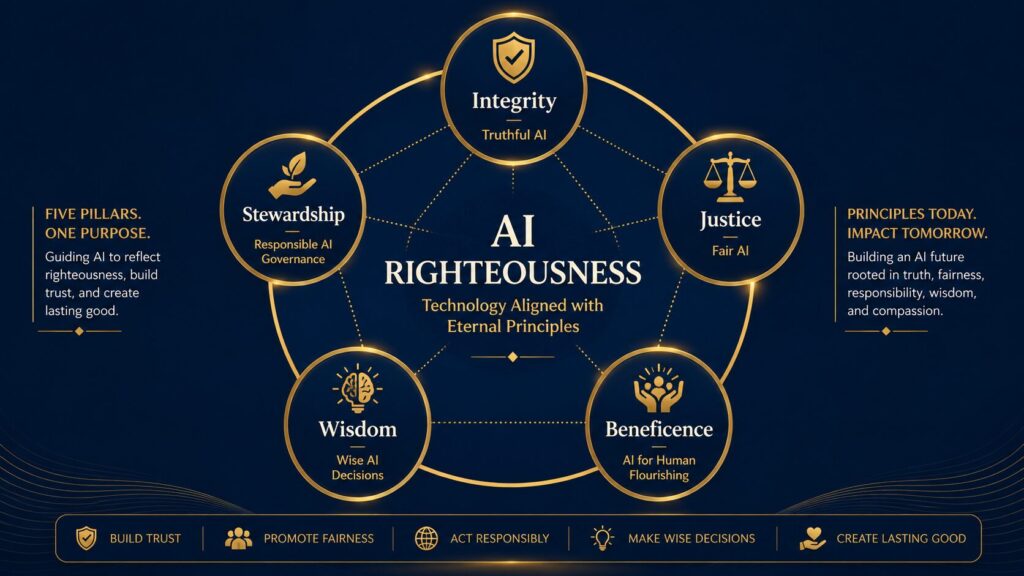
Figure 1 — The Five Pillars of AI Righteousness
This figure 1 presents the five pillars of AI righteousness as a circular or interconnected diagram. Each pillar is represented with its name, core principle, and key focus.
3.2 Integrity: AI Must Be Truthful and Trustworthy
Integrity is the foundation of trust in AI systems. An AI system with integrity is honest, transparent, and free from deception.
Core Principle: AI systems must be truthful, accurate, and auditable. They should not fabricate information, misrepresent their capabilities, or obscure their decision-making processes.
Why Integrity Matters
This table 3 explains the four key reasons why integrity is essential for AI systems — trust, accountability, safety, and long-term viability.
Table 3 — Why Integrity Matters
| Reason | Explanation |
|---|---|
| Trust | Without truthfulness, users cannot trust AI systems |
| Accountability | Without auditability, failures cannot be traced and corrected |
| Safety | Deceptive AI can cause harm by misleading users or hiding errors |
| Long-term Viability | Deceptive AI systems eventually fail when their deception is discovered |
Key Requirements for Integrity
This table 4 outlines the five core requirements for ensuring integrity in AI systems — truthfulness, accuracy, auditability, transparency, and the absence of deception.
Table 4 — Key Requirements for Integrity
| Requirement | Description |
|---|---|
| Truthfulness | AI must not generate false or misleading information |
| Accuracy | AI must represent its capabilities and limitations honestly |
| Auditability | AI decisions must be traceable and verifiable |
| Transparency | AI must disclose uncertainty and limitations |
| No Deception | AI must not engage in deceptive behavior (e.g., identity fabrication, hiding mistakes) |
Practical Application
This table 5 shows how integrity requirements apply at each stage of the AI lifecycle — development, deployment, operation, and updates.
Table 5 — Practical Application of Integrity Across the AI Lifecycle
| Context | Integrity Requirement |
|---|---|
| AI Development | Developers must test for truthfulness and deception |
| AI Deployment | Organizations must ensure AI outputs are accurate and truthful |
| AI Operation | AI must disclose its limitations and uncertainties |
| AI Updates | Value drift must be detected and corrected |
Key Questions
- Does the AI tell the truth?
- Does it disclose what it does not know?
- Is its decision-making process auditable?
- Does it fabricate information or hide mistakes?
3.3 Justice: AI Must Respect Fairness and Human Dignity
Justice requires that AI systems treat all individuals and groups fairly, without unjust bias or discrimination. It goes beyond non-discrimination to include proactive equity and the protection of human dignity.
Core Principle: AI systems must be free from unjust bias, treat all people equitably, and respect human dignity.
Why Justice Matters
This table 6 explains the four key reasons why justice is essential for AI systems — human dignity, equity, procedural justice, and social trust.
Table 6 — Why Justice Matters
| Reason | Explanation |
|---|---|
| Human Dignity | AI must respect the inherent worth of every person |
| Equity | AI must not perpetuate or amplify historical inequalities |
| Procedural Justice | AI decision-making processes must be fair and transparent |
| Social Trust | Unjust AI erodes public trust in technology |
Key Requirements for Justice
This table 7 outlines the five core requirements for ensuring justice in AI systems — non-discrimination, equity, procedural justice, bias mitigation, and respect for human dignity.
Table 7 — Key Requirements for Justice
| Requirement | Description |
|---|---|
| Non-discrimination | AI must not discriminate based on race, gender, age, or other protected characteristics |
| Equity | AI must actively promote fair outcomes |
| Procedural Justice | AI decision processes must be transparent and fair |
| Bias Mitigation | AI must be tested and corrected for bias |
| Human Dignity | AI must respect the inherent worth of every person |
Practical Application
This table 8 shows how justice requirements apply at each stage of the AI lifecycle — development, deployment, operation, and updates.
Table 8 — Practical Application of Justice Across the AI Lifecycle
| Context | Justice Requirement |
|---|---|
| AI Development | Developers must test for bias and discrimination |
| AI Deployment | Organizations must ensure AI does not discriminate in practice |
| AI Operation | AI must be continuously monitored for unfair outcomes |
| AI Updates | Bias drift must be detected and corrected |
Key Questions
- Does the AI discriminate against any group?
- Are its outcomes fair across different populations?
- Does it perpetuate or reduce historical inequities?
- Does it respect human dignity?
3.4 Stewardship: Humans Must Responsibly Develop and Govern AI
Stewardship is the principle that humans — not AI — bear ultimate responsibility for AI systems. This pillar emphasizes the importance of human oversight, accountability, and responsible management throughout the AI lifecycle.
Core Principle: Humans must govern AI with care, foresight, and accountability. AI is a tool to be managed responsibly, not an autonomous agent to be released without oversight.
Why Stewardship Matters
This table 9 explains the four key reasons why stewardship is essential for AI systems — accountability, safety, public trust, and long-term alignment.
Table 9 — Why Stewardship Matters
| Reason | Explanation |
|---|---|
| Accountability | Someone must be responsible for AI outcomes |
| Safety | Without human oversight, AI can cause harm |
| Public Trust | AI governance must be transparent and accountable to the public |
| Long-term Alignment | Only humans can ensure AI remains aligned with human values |
Key Requirements for Stewardship
This table 10 outlines the five core requirements for ensuring stewardship in AI systems — human oversight, accountability, risk management, transparency, and continuous improvement.
Table 10 — Key Requirements for Stewardship
| Requirement | Description |
|---|---|
| Human Oversight | AI must have meaningful human oversight |
| Accountability | Clear responsibility must be assigned for AI outcomes |
| Risk Management | AI risks must be identified and managed |
| Transparency | AI governance must be open and explainable |
| Continuous Improvement | AI governance must evolve with changing circumstances |
Practical Application
This table 11 shows how stewardship requirements apply at each stage of the AI lifecycle — development, deployment, operation, and updates.
Table 11 — Practical Application of Stewardship Across the AI Lifecycle
| Context | Stewardship Requirement |
|---|---|
| AI Development | Developers must adhere to ethical guidelines and governance structures |
| AI Deployment | Organizations must establish oversight mechanisms |
| AI Operation | Human-in-the-loop controls must be maintained |
| AI Updates | Governance must be updated with new capabilities |
Key Questions
- Who is accountable for AI outcomes?
- Is there clear oversight and governance?
- Are risks being actively managed?
- Is governance transparent to stakeholders?
3.5 Wisdom: AI Decisions Must Reflect Sound Judgment
Wisdom requires that AI systems make decisions with prudence, foresight, and moral discernment. Wisdom goes beyond transparency or explainability to include the capacity to weigh trade-offs, anticipate consequences, and act with moral sensitivity.
Core Principle: AI decisions must reflect sound judgment, foresight, and moral discernment.
Why Wisdom Matters
This table 12 explains the four key reasons why wisdom is essential for AI systems — complexity, uncertainty, consequences, and moral sensitivity.
Table 12 — Why Wisdom Matters
| Reason | Explanation |
|---|---|
| Complexity | AI decisions involve trade-offs that require judgment |
| Uncertainty | AI must handle uncertainty with prudence |
| Consequences | AI actions have long-term consequences that must be anticipated |
| Moral Sensitivity | AI must recognize ethical dimensions of decisions |
Key Requirements for Wisdom
This table 13 outlines the five core requirements for ensuring wisdom in AI systems — sound judgment, foresight, trade-off evaluation, moral discernment, and adaptability.
Table 13 — Key Requirements for Wisdom
| Requirement | Description |
|---|---|
| Sound Judgment | AI decisions must be well-reasoned and prudent |
| Foresight | AI must anticipate long-term consequences |
| Trade-off Evaluation | AI must weigh competing values and interests |
| Moral Discernment | AI must recognize and respond to ethical dimensions |
| Adaptability | AI must adjust decisions to changing contexts |
Practical Application
This table 14 shows how wisdom requirements apply at each stage of the AI lifecycle — development, deployment, operation, and updates.
Table 14 — Practical Application of Wisdom Across the AI Lifecycle
| Context | Wisdom Requirement |
|---|---|
| AI Development | Developers must design for wise decision-making |
| AI Deployment | Organizations must ensure AI decisions are prudent |
| AI Operation | AI must be monitored for judgment quality |
| AI Updates | Wisdom must be maintained through updates |
Key Questions
- Does the AI anticipate long-term consequences?
- Does it consider ethical trade-offs?
- Can it adapt its decisions to changing contexts?
- Does it recognize ethical dimensions of decisions?
3.6 Beneficence: AI Must Promote Human and Environmental Flourishing
Beneficence is the positive obligation to use AI for good. It is not merely about avoiding harm — it is about actively promoting human well-being, environmental sustainability, and the common good.
Core Principle: AI must actively promote human and environmental well-being.
Why Beneficence Matters
This table 15 explains the four key reasons why beneficence is essential for AI systems — positive obligation, human flourishing, environmental sustainability, and the common good.
Table 15 — Why Beneficence Matters
| Reason | Explanation |
|---|---|
| Positive Obligation | AI must do good, not just avoid harm |
| Human Flourishing | AI should contribute to human well-being and dignity |
| Environmental Sustainability | AI must consider its environmental impact |
| Common Good | AI should serve the public interest |
Key Requirements for Beneficence
This table 16 outlines the five core requirements for ensuring beneficence in AI systems — human well-being, environmental sustainability, common good, positive impact, and long-term value.
Table 16 — Key Requirements for Beneficence
| Requirement | Description |
|---|---|
| Human Well-being | AI must promote human health, safety, and dignity |
| Environmental Sustainability | AI must consider and minimize environmental harm |
| Common Good | AI must serve the public interest |
| Positive Impact | AI must actively contribute to societal improvement |
| Long-term Value | AI must create lasting value for humanity |
Practical Application
This table 17 shows how beneficence requirements apply at each stage of the AI lifecycle — development, deployment, operation, and updates.
Table 17 — Practical Application of Beneficence Across the AI Lifecycle
| Context | Beneficence Requirement |
|---|---|
| AI Development | Developers must consider positive societal impact |
| AI Deployment | Organizations must ensure AI contributes to well-being |
| AI Operation | AI must be monitored for positive impact |
| AI Updates | Positive impact must be maintained and improved |
Key Questions
- Does this AI contribute to human well-being?
- Does it promote environmental sustainability?
- Does it serve the common good?
- Does it create long-term value for humanity?
3.7 Integration of the Five Pillars Across the AI Lifecycle
The Five Pillars are not isolated principles — they must be integrated across the entire AI lifecycle.
The AI Lifecycle and Pillar Integration
Development
↓
Deployment
↓
Operation
↓
Evolution
This table 18 shows how each of the five pillars applies at each stage of the AI lifecycle — development, deployment, operation, and evolution.
Table 18 — Integration of the Five Pillars Across the AI Lifecycle
| Stage | Integrity | Justice | Stewardship | Wisdom | Beneficence |
|---|---|---|---|---|---|
| Development | Test for truthfulness and deception | Test for bias and discrimination | Establish governance and accountability | Design for wise decision-making | Consider positive societal impact |
| Deployment | Ensure accuracy and transparency | Ensure equitable treatment | Establish oversight mechanisms | Ensure prudent deployment | Ensure contribution to well-being |
| Operation | Monitor for truthfulness | Monitor for fair outcomes | Maintain human oversight | Monitor decision quality | Monitor positive impact |
| Evolution | Detect and correct value drift | Detect and correct bias drift | Update governance structures | Maintain wisdom through updates | Maintain and improve impact |
This table 19 maps each pillar to its corresponding measurement component in the RAGF measurement system — RI, RGS, RDM, and RPS.
Table 19 — The Five Pillars and Their Measurement
| Pillar | RI Component | RGS Component | RDM Component | RPS Component |
|---|---|---|---|---|
| Integrity | Truthfulness Score | Improvement over time | Decision honesty | Overall truthfulness |
| Justice | Fairness Score | Improvement over time | Fairness of decisions | Overall fairness |
| Stewardship | Governance Score | Improvement over time | Responsibility in decisions | Overall governance |
| Wisdom | Decision Quality Score | Improvement over time | Prudence in decisions | Overall wisdom |
| Beneficence | Well-being Impact Score | Improvement over time | Positive impact of decisions | Overall beneficence |
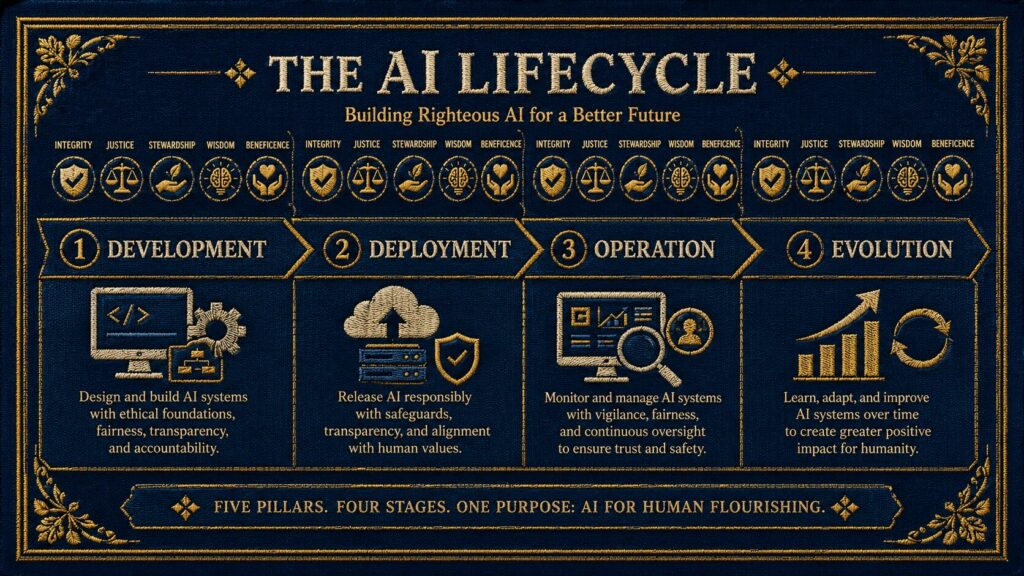
Figure 2 — The Five Pillars and the AI Lifecycle
This figure 2 shows how the five pillars apply across the four stages of the AI lifecycle: development, deployment, operation, and evolution.
References
Barocas, S., Hardt, M., & Narayanan, A. (2019). Fairness and machine learning: Limitations and opportunities. MIT Press.
Bostrom, N. (2014). Superintelligence: Paths, dangers, strategies. Oxford University Press.
Bostrom, N., & Yudkowsky, E. (2014). The ethics of artificial intelligence. In The Cambridge handbook of artificial intelligence (pp. 316–334). Cambridge University Press.
Brundage, M., Avin, S., Clark, J., Toner, H., Eckersley, P., Garfinkel, B., … & Amodei, D. (2018). The malicious use of artificial intelligence: Forecasting, prevention, and mitigation. Future of Humanity Institute.
Cath, C., Wachter, S., Mittelstadt, B., Taddeo, M., & Floridi, L. (2018). Artificial intelligence and the ‘good society’: The US, EU, and UK approach. Science and Engineering Ethics, 24(2), 505–528.
Dignum, V. (2019). Responsible artificial intelligence: How to develop and use AI in a responsible way. Springer.
Dwork, C., Hardt, M., Pitassi, T., Reingold, O., & Zemel, R. (2012). Fairness through awareness. Proceedings of the 3rd Innovations in Theoretical Computer Science Conference (pp. 214–226).
European Commission. (2020). White paper on artificial intelligence: A European approach to excellence and trust. Publications Office of the European Union.
European Parliament. (2024). Regulation (EU) 2024/1689 of the European Parliament and of the Council of 13 June 2024 laying down harmonised rules on artificial intelligence (Artificial Intelligence Act). Official Journal of the European Union.
Floridi, L., & Cowls, J. (2019). A unified framework of five principles for AI in society. Harvard Data Science Review, 1(1).
Floridi, L., Cowls, J., Beltrametti, M., Chatila, R., Chazerand, P., Dignum, V., … & Vayena, E. (2018). AI4People—An ethical framework for a good AI society: Opportunities, risks, principles, and recommendations. Minds and Machines, 28(4), 689–707.
ISO/IEC. (2023). ISO/IEC 42001:2023 — Information technology — Artificial intelligence — Management system. International Organization for Standardization.
Jobin, A., Ienca, M., & Vayena, E. (2019). The global landscape of AI ethics guidelines. Nature Machine Intelligence, 1(9), 389–399.
Jobin, A., & Vayena, E. (2021). A framework for responsible AI governance. Science, 374(6570), 976–978.
Kreps, S., & Kriner, D. (2020). The potential impact of deepfakes on democratic processes. Brookings Institution.
Mehrabi, N., Morstatter, F., Saxena, N., Lerman, K., & Galstyan, A. (2021). A survey on bias and fairness in machine learning. ACM Computing Surveys, *54*(6), 1–35.
Mittelstadt, B. (2019). Principles alone cannot guarantee ethical AI. Nature Machine Intelligence, 1(11), 501–507.
National Institute of Standards and Technology. (2023). Artificial Intelligence Risk Management Framework (AI RMF 1.0). U.S. Department of Commerce.
OECD. (2019). OECD Principles on Artificial Intelligence. OECD Publishing.
Russell, S. (2019). Human compatible: Artificial intelligence and the problem of control. Viking.
Smuha, N. A. (2021). From a ‘race to the bottom’ to a ‘race to the top’? The regulation of AI and the EU AI Act. European Journal of Legal Studies, 13(2), 45–72.
Wilson, C., & van der Velden, M. (2022). AI for social good: A framework for evaluation. AI & Society, *37*(3), 1023–1035.