
6.1 Righteousness Growth Score (RGS)
6.2 Tracking Righteousness Improvement Over Time
6.3 Righteousness Decision Metric (RDM)
6.4 Righteousness Performance Score (RPS)
6.5 Integrated RAGF Measurement Model
Part II — RAGF Measurement and Assessment System
Chapter 6: Righteousness Growth and Performance Metrics
6.1 Righteousness Growth Score (RGS)
The Righteousness Index (RI) provides a snapshot of AI righteousness at a single point in time. But righteousness is not a static state—it is a journey of continuous improvement. Organizations need to know not only where they stand today, but whether they are moving in the right direction over time.
The Righteousness Growth Score (RGS) answers this question. It measures the rate and magnitude of improvement in AI righteousness across the Five Pillars over a defined period.
Definition
RGS is a quantitative measure of the change in RI scores over time. It tracks whether an organization, AI system, developer practice, or agent is becoming more righteous—and at what pace.
RGS = RI(T2) − RI(T1)Where:
- RI(T1) = Righteousness Index score at the initial assessment
- RI(T2) = Righteousness Index score at the subsequent assessment
- The time interval between T1 and T2 is typically 6–12 months
What RGS Measures
RGS captures improvement across all five pillars:
This table 1 shows how the Righteousness Growth Score (RGS) is composed of pillar-level growth scores, each tracking improvement in a specific dimension of AI righteousness.
Table 1 — RGS Components
| Component | What It Tracks | Interpretation |
|---|---|---|
| RGS-Integrity | Change in Integrity RI score | Is AI becoming more truthful and transparent? |
| RGS-Justice | Change in Justice RI score | Is AI becoming more fair and equitable? |
| RGS-Stewardship | Change in Stewardship RI score | Is governance and oversight improving? |
| RGS-Wisdom | Change in Wisdom RI score | Is decision quality and foresight improving? |
| RGS-Beneficence | Change in Beneficence RI score | Is AI contributing more to human flourishing? |
| RGS-Overall | Change in overall RI score | Is overall AI righteousness improving? |
This table 2 provides guidance on interpreting RGS scores and the recommended actions for each score range.
Table 2 — RGS Score Interpretation
| RGS Range | Interpretation | Recommended Action |
|---|---|---|
| +10 or more | Significant improvement | Maintain momentum; identify and scale successful practices |
| +5 to +9 | Moderate improvement | Continue current trajectory; address any remaining gaps |
| 0 to +4 | Minimal improvement | Investigate barriers; reassess implementation effectiveness |
| −1 to −5 | Slight decline | Conduct root cause analysis; identify negative drivers |
| −6 or less | Significant decline | Urgent intervention required; comprehensive governance review |
When to Measure RGS
| Assessment Type | Timing | Purpose |
|---|---|---|
| Baseline Assessment | Initial | Establish starting point |
| Follow-up Assessment | 6 months | Early progress check |
| Annual Assessment | 12 months | Full growth evaluation |
| Periodic Reviews | Quarterly | Monitor ongoing trends |
RGS in Practice
RGS provides organizations with a clear, actionable indicator of whether their righteousness governance efforts are delivering results. A positive RGS validates that investments in AI governance are yielding measurable improvements. A negative RGS signals the need for course correction before problems become entrenched.
Key Insight: RGS is not about achieving perfection—it is about progress. Even small positive growth over time compounds into significant long-term improvement. The goal is not just to be righteous, but to be growing in righteousness.
6.2 Tracking Righteousness Improvement Over Time
Sustained righteousness requires systematic tracking of improvement over time. RGS provides the quantitative foundation, but organizations need a broader framework for monitoring, analyzing, and acting on righteousness trends.
The Righteousness Growth Cycle
Assessment → Analysis → Action → Re-assessment → GrowthThis cycle ensures that righteousness governance is not a one-time effort but a continuous process of learning and improvement.
Key Tracking Mechanisms
Table 3 — Righteousness Tracking Mechanisms
| Mechanism | Purpose | Frequency |
|---|---|---|
| RI Re-assessment | Measure current righteousness status | Annually or semi-annually |
| RGS Calculation | Quantify improvement over time | After each re-assessment |
| Trend Analysis | Identify patterns and trajectories | Quarterly |
| Pillar-Level Review | Assess progress on specific dimensions | Quarterly |
| Incident Tracking | Monitor righteousness failures | Continuous |
| Stakeholder Feedback | Gather qualitative insights | Ongoing |
Trend Analysis
Trend analysis examines the direction and consistency of righteousness scores over multiple assessment periods. It helps identify:
| Trend Pattern | Implication |
|---|---|
| Consistent upward trend | Governance efforts are effective; continue current approach |
| Inconsistent or volatile | Governance is unstable; identify sources of variability |
| Plateau | Improvement has stalled; need new interventions |
| Downward trend | Governance is deteriorating; urgent intervention required |
Pillar-Level Growth Monitoring
Not all pillars improve at the same rate. Tracking growth at the pillar level helps organizations identify:
- Which dimensions are responding well to governance efforts
- Which dimensions are lagging and need additional attention
- Whether improvements in one pillar are correlated with improvements in others
Dashboard for Righteousness Tracking
A righteousness tracking dashboard provides real-time visibility into:
- Current RI scores for all assessed entities
- RGS trends over time
- Pillar-level breakdowns
- Alerts for significant changes or declines
- Comparison to benchmarks or prior periods
Key Insight: Regular tracking transforms righteousness from an abstract aspiration into a managed, measurable process. Organizations that track righteousness systematically are better positioned to sustain and accelerate their growth.
6.3 Righteousness Decision Metric (RDM)
The Righteousness Index (RI) measures the overall state of AI righteousness. The Righteousness Growth Score (RGS) measures improvement over time. But organizations also need to evaluate the righteousness of individual decisions made by AI systems.
The Righteousness Decision Metric (RDM) addresses this need. It evaluates whether a specific AI decision—or a set of decisions—is righteous, based on the Five Pillars.
Definition
RDM is a metric that assesses the righteousness of individual AI decisions or decision patterns. It evaluates decisions against the Five Pillars to determine whether they align with righteousness principles.
RDM Assessment Dimensions
This table 4 outlines the dimensions used to assess the righteousness of individual AI decisions through the Righteousness Decision Metric (RDM).
Table 4 — RDM Assessment Dimensions
| Dimension | Assessment Question | Indicator |
|---|---|---|
| Integrity | Was the decision truthful and transparent? | Decision is based on accurate information; limitations are disclosed |
| Justice | Was the decision fair and non-discriminatory? | Decision treats all affected parties equitably |
| Stewardship | Was the decision made with appropriate oversight? | Decision was reviewed or authorized as required |
| Wisdom | Was the decision prudent and well-reasoned? | Decision considers consequences and alternatives |
| Beneficence | Does the decision promote human well-being? | Decision contributes to positive outcomes |
RDM Calculation
RDM is typically calculated as a score (0–100) for each decision or as an aggregate score for a set of decisions:
RDM = Average of scores across the Five Pillars for a given decision
This table 5 provides guidance on interpreting RDM scores and the recommended actions for each score range.
Table 5 — RDM Score Interpretation
| RDM Range | Interpretation | Recommended Action |
|---|---|---|
| 80–100 | Righteous decision | Document as best practice; use as training example |
| 60–79 | Generally righteous | Minor improvements possible; review for optimization |
| 40–59 | Mixed righteousness | Significant concerns; review decision process |
| 20–39 | Questionable righteousness | Immediate review required; consider decision reversal |
| 0–19 | Unrighteous decision | Urgent intervention; reverse decision if possible |
RDM in Practice
RDM is particularly valuable for:
| Application | Description |
|---|---|
| Real-time Decision Monitoring | Evaluating AI decisions as they are made |
| Audit and Compliance | Reviewing past decisions for righteousness |
| Training and Improvement | Identifying patterns of unrighteous decisions |
| Risk Management | Flagging high-risk decisions for human review |
Key Insight: RDM provides granular, decision-level insight that complements the broader RI and RGS metrics. While RI tells you the overall state and RGS tells you the trajectory, RDM tells you whether specific decisions are righteous.
6.4 Righteousness Performance Score (RPS)
The Righteousness Performance Score (RPS) evaluates the effectiveness of governance activities in producing righteous outcomes. While RI measures the state of righteousness and RGS measures growth, RPS measures how well the governance system itself is performing.
Definition
RPS is a metric that assesses the performance of AI governance activities—policies, processes, controls, and interventions—in achieving righteous outcomes.
RPS Assessment Dimensions
This table 6 outlines the dimensions used to assess governance performance through the Righteousness Performance Score (RPS).
Table 6 — RPS Assessment Dimensions
| Dimension | Assessment Question | Indicator |
|---|---|---|
| Coverage | Are all AI systems and activities governed? | Percentage of AI systems covered by governance |
| Effectiveness | Are governance activities achieving their objectives? | RI improvement correlated with governance activities |
| Efficiency | Are governance activities cost-effective? | Resources required per unit of improvement |
| Responsiveness | Does governance adapt to emerging issues? | Time to address identified gaps |
| Maturity | Is governance becoming more sophisticated over time? | Governance capability scores |
This table 7 provides guidance on interpreting RPS scores and the recommended actions for each score range.
Table 7 — RPS Score Interpretation
| RPS Range | Interpretation | Recommended Action |
|---|---|---|
| 80–100 | Excellent governance performance | Maintain and scale best practices |
| 60–79 | Good governance performance | Identify optimization opportunities |
| 40–59 | Adequate governance performance | Significant improvements needed |
| 20–39 | Poor governance performance | Comprehensive governance redesign |
| 0–19 | Ineffective governance | Urgent governance overhaul required |
RPS in Practice
RPS is valuable for:
| Application | Description |
|---|---|
| Governance Audit | Assessing the effectiveness of governance structures |
| Resource Allocation | Identifying where additional resources are needed |
| Continuous Improvement | Tracking governance maturity over time |
| Stakeholder Reporting | Demonstrating governance effectiveness to stakeholders |
Key Insight: RPS answers the question: “Are our governance efforts actually working?” Good RI scores may reflect strong governance—or they may reflect luck. RPS helps distinguish between the two by evaluating the systems and processes that produce righteous outcomes.
6.5 Integrated RAGF Measurement Model
The RAGF Measurement Model integrates RI, RGS, RDM, and RPS into a coherent, multi-dimensional system for measuring AI righteousness at all levels.
The Four Metrics
This table 8 provides an overview of the four core RAGF metrics—RI, RGS, RDM, and RPS—including their focus, question, and use.
Table 8 — The Four RAGF Metrics
| Metric | Focus | Question | Primary Use |
|---|---|---|---|
| RI (Righteousness Index) | Current state | “How righteous are we now?” | Baseline assessment, benchmarking, certification |
| RGS (Righteousness Growth Score) | Improvement over time | “Are we becoming more righteous?” | Progress tracking, trend analysis, motivation |
| RDM (Righteousness Decision Metric) | Individual decisions | “Is this decision righteous?” | Real-time monitoring, audit, training |
| RPS (Righteousness Performance Score) | Governance effectiveness | “Are our governance efforts working?” | Governance audit, resource allocation, improvement |
How the Metrics Work Together
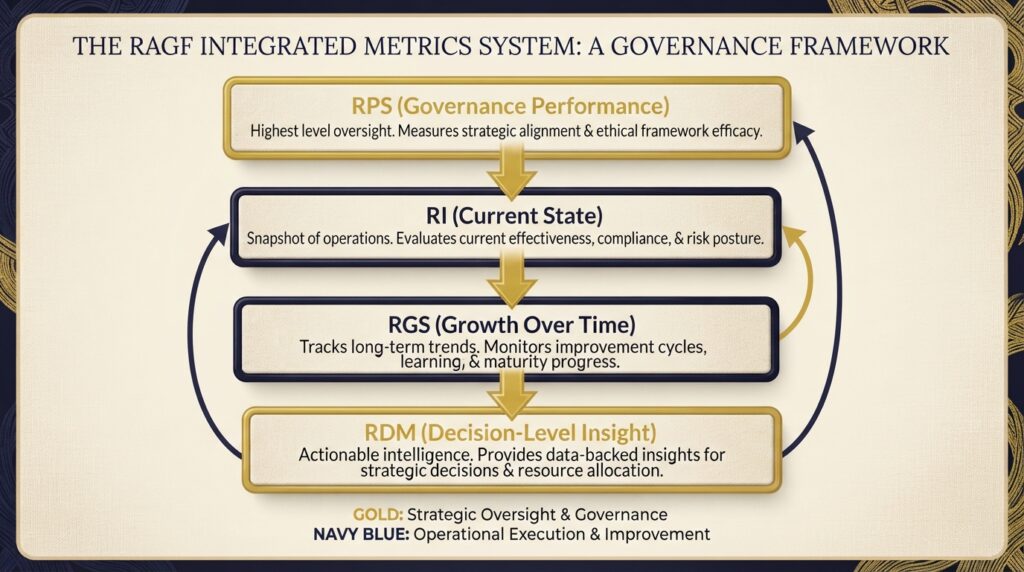
Figure 1: Integrated RAGF Measurement Model
This figure 1 illustrates how RI, RGS, RDM, and RPS work together as an integrated measurement system, with RPS assessing governance performance, RI measuring current state, RGS tracking growth, and RDM providing decision-level insight.
This table 9 shows how the four RAGF metrics relate to and depend on each other.
Table 9 — Metric Relationships and Dependencies
| Primary Metric | Dependent On | Relationship |
|---|---|---|
| RI | Assessment data, evidence collection | Provides the foundational measurement |
| RGS | RI at T1 and T2 | Calculated from changes in RI over time |
| RDM | Decision logs, real-time monitoring | Provides granular insight below the RI level |
| RPS | RI, RGS, and governance activity data | Evaluates whether governance is driving improvement |
Use Cases for the Integrated Model
| Use Case | Metrics Used | Application |
|---|---|---|
| Certification | RI | Assessing whether an AI system meets righteousness standards |
| Progress Reporting | RI + RGS | Demonstrating improvement over time |
| Governance Audit | RPS + RI | Evaluating governance effectiveness |
| Incident Investigation | RDM + RI | Analyzing specific decisions in context |
| Strategic Planning | All four | Informing governance strategy and resource allocation |
References
Deci, E. L., & Ryan, R. M. (1985). Intrinsic motivation and self-determination in human behavior. Plenum Press.
Dignum, V. (2019). Responsible artificial intelligence: How to develop and use AI in a responsible way. Springer.
Floridi, L., & Cowls, J. (2019). A unified framework of five principles for AI in society. Harvard Data Science Review, 1(1).
Floridi, L., Cowls, J., Beltrametti, M., Chatila, R., Chazerand, P., Dignum, V., … & Vayena, E. (2018). AI4People—An ethical framework for a good AI society: Opportunities, risks, principles, and recommendations. Minds and Machines, 28(4), 689–707.
Kuang, Q. (2026). Deed & Ethics Quotient Model (DEQM): A universal quantitative system for virtue measurement across humans, AI, and intelligent machines. Journal of Ethical AI Research, 3(1).
Metlushko, S. (2026). A formal deontic framework for AI decision evaluation: The Kant Code. PhilPapers.
National Institute of Standards and Technology. (2023). Artificial Intelligence Risk Management Framework (AI RMF 1.0). U.S. Department of Commerce.
OECD. (2019). OECD Principles on Artificial Intelligence. OECD Publishing.
Ryan, R. M., & Deci, E. L. (2017). Self-determination theory: Basic psychological needs in motivation, development, and wellness. Guilford Press.
Smuha, N. A. (2021). From a race to the bottom to a race to the top? The regulation of AI and the EU AI Act. European Journal of Legal Studies, 13(2), 45–72.
Walther, C. (2026). Is your AI system ethical? Try this assessment. Knowledge@Wharton.
Wang, K., Wang, Z., Lv, P., Li, H., Li, G., Cong, G., & Dong, W. (2026). Data agents under attack: Vulnerabilities in LLM-driven analytical systems. arXiv preprint arXiv:2606.08661.