
9.1 The Future of Physical AI and Robotics
9.2 Physical Behavior and Righteous Responsibility
9.3 Human Safety and Human Dignity Protection
9.4 Robot Behavior Monitoring Framework
9.5 RI‑R Assessment Methodology
9.6 Robot Righteousness Maturity Levels
Part III — RAGF Across the AI Lifecycle
Chapter 9: Generation 3 — Embodied AI Governance
9.1 The Future of Physical AI and Robotics
The first generation of AI governance addressed development — how AI systems are built. The second generation addressed autonomous agents — how AI systems make decisions. The third generation addresses embodied AI — how AI systems act in the physical world.
Embodied AI — also referred to as physical AI — represents the frontier where intelligent systems move beyond digital outputs and directly interact with physical environments. Robots, autonomous vehicles, drones, humanoid assistants, and industrial automation systems are no longer confined to research labs. They are entering factories, hospitals, homes, and public spaces.
Why Generation 3 Is Different
Table 1 — Disembodied AI vs. Embodied AI: Key Differences
| Dimension | Disembodied AI (Gen 1-2) | Embodied AI (Gen 3) |
|---|---|---|
| Domain | Digital (code, data, text) | Physical (space, objects, humans) |
| Failure Mode | Incorrect output, bias, hallucination | Physical harm, property damage, injury |
| Accountability | Single provider/organization | Multi-layer supply chain (LLM provider, robot manufacturer, system integrator, deployer, end user) |
| Risk Profile | Informational/algorithmic | Physical, spatial, and social |
| Regulatory Gap | Covered by EU AI Act, NIST RMF | Lacks specific provisions for physical dimensions |
| Human Interaction | Screen-based | Physical co-presence |
| Trust Requirement | Accuracy, reliability | Safety, predictability, care |
The Capability-Safety Gap
A significant challenge facing embodied AI is the gap between capability and safety. Industry products are rapidly advancing in functionality while safety mechanisms lag behind. As one analysis notes, “when an error’s risk is no longer a line of garbled code on a screen, but may lead to real-world physical harm, the question becomes urgent: how do we ensure these increasingly powerful embodied agents are safe and trustworthy?”
The Robotics Guardian Movement
In response to these challenges, both industry and academia are developing governance frameworks specifically for embodied AI. The Robotics Guardian Standard establishes eight requirements for machines operating inside private homes, including that a resident’s private life belongs to that resident; the machine cannot be turned against a household member; it cannot produce images of an unclothed person; it cannot manipulate a grieving or isolated resident; and it cannot act as an informant. Each requirement is anchored in existing law, including COPPA, EU AI Act manipulation prohibitions, child safety reporting statutes, and vehicle event data ownership precedent.
Key Insight: Embodied AI governance is not merely an extension of digital AI governance. It requires new frameworks, new standards, and new accountability structures that address the physical, spatial, and social dimensions of AI systems operating in the real world.
9.2 Physical Behavior and Righteous Responsibility
When AI systems act in the physical world, their behavior raises ethical questions that have no parallel in disembodied AI.
The Dignity Standard
A central ethical principle for embodied AI is that physical AI must be treated as an experience ecosystem, not a gadget — designed for workers, families, and communities, not just for technical demonstration. The same technology that can reduce drudgery can also amplify risk, bias, and exclusion if the design intent is purely efficiency rather than dignity.
Key questions for embodied AI righteous include:
Table 2 — Key Questions for Embodied AI Righteousness
| Question | Implication |
|---|---|
| “Whom does this robot serve, and whom does it displace?” | Embodied AI must be evaluated for its impact on all stakeholders |
| “What happens to agency, trust, and safety when algorithms act in the real world?” | Physical AI requires new governance mechanisms |
| “Whose comfort, culture, and constraints are baked into the design?” | Embodied AI must respect diverse cultural contexts |
The Physical Harm Accountability Gap
When an embodied AI system causes physical harm, the causal chain typically spans multiple layers — LLM provider, robot manufacturer, system integrator, deployer, end user — creating accountability gaps that are more acute than in disembodied AI settings. Existing liability frameworks for software errors or product defects do not cleanly map onto harm caused by the interaction between a foundation model’s reasoning, a planner’s trajectory generation, and a controller’s actuation under uncertain physical conditions. This ambiguity can delay victim recourse and weaken incentives for safety investment across the supply chain.
Concrete Response Strategies
Table 3 — Concrete Response Strategies for Embodied AI Governance
| Strategy | Description |
|---|---|
| Embodied AI-Specific Safety Certification | Extend existing standards (ISO 10218, ISO 13482, ISO/TS 15066) to cover foundation-model-integrated robotic systems, with mandatory pre-deployment physical safety testing in standardized scenarios |
| Physical Harm Liability Frameworks | Clearly allocate responsibility across the embodied AI supply chain, analogous to product liability in automotive or medical device industries |
| Longitudinal Societal Impact Assessments | Require deployers to monitor and report on physical safety incidents, labor market effects, and community-level social impacts over time |
| Participatory Governance | Include affected communities, workers, and civil society organizations in decisions about where and how embodied AI systems are deployed |
Postcolonial Ethics for Embodied AI
Research has also highlighted that dominant roboethics frameworks often assume Western-centric values and may not be adequate for diverse cultural contexts. Scholars have proposed augmenting existing frameworks with four complementary ethical dimensions:
Table 4 — Postcolonial Ethics Dimensions for Embodied AI
| Dimension | Description |
|---|---|
| Epistemic Non-Imposition | Respect indigenous knowledge systems |
| Onto-Contextual Consistency | Preserve cultural coherence |
| Agentic Boundaries | Account for communal decision structures |
| Embodied Spatial Justice | Enhance capabilities for marginalized communities |
Key Insight: Ethical responsibility for embodied AI cannot be reduced to technical safety or legal compliance. It requires dignity-centered design, clear accountability structures, and cultural awareness that respects the diverse contexts in which robots operate.
9.3 Human Safety and Human Dignity Protection
Human safety and human dignity are the twin foundations of embodied AI governance. Neither can be sacrificed for the other.
The Safety Imperative
Safety in embodied AI is not merely about preventing harm — it is about ensuring that AI systems can be trusted to operate in human spaces. As one expert noted, “When AI becomes embodied, safety and trust become paramount”.
Safety Categories
This table outlines the four key safety categories for embodied AI systems — physical safety, operational safety, behavioral safety, and semantic safety — including their descriptions and examples.
Table 5 — Safety Categories for Embodied AI
| Category | Description | Examples |
|---|---|---|
| Physical Safety | Preventing physical harm to humans | Safe navigation, collision avoidance, force control |
| Operational Safety | Ensuring reliable operation | Failure detection, graceful degradation, redundancy |
| Behavioral Safety | Preventing harmful actions | Rule enforcement, action boundaries, human oversight |
| Semantic Safety | Understanding safety in context | ASIMOV Benchmark: 500k situations grounded in real-world visual scenes and hospital injury reports |
Semantic Safety: The ASIMOV Benchmark
Recent research has developed the ASIMOV Benchmark — a collection of large-scale semantic safety datasets grounded in real-world visual scenes and human injury reports from hospitals (500k situations, 3M instructions). Researchers have also developed a framework to automatically generate robot constitutions from real-world data to steer robot behavior using Constitutional AI mechanisms, achieving an alignment rate of 84.3% on the ASIMOV Benchmark — outperforming no-constitution baselines and human-written constitutions. The researchers argue that human interpretability and modifiability of constitutions inferred from data make them an ideal medium for behavior governance of AI-controlled robots.
The Dignity Imperative
Human dignity protection requires that embodied AI systems:
Table 6 — The Dignity Imperative for Embodied AI
| Requirement | Description |
|---|---|
| Respect Privacy | A resident’s private life belongs to that resident, not to whoever purchased the robot |
| Prevent Manipulation | The machine cannot manipulate a grieving or isolated resident |
| Protect Vulnerable Populations | The machine cannot be turned against a household member |
| Preserve Human Agency | Robot or AI model should never replace human beings in critical roles |
| Uphold Human Dignity | “The guiding principle is not solely profit but the dignity of every person and the common good of all people” |
The Robotic Guardianship Model
The Robotics Guardian Standard embodies these principles in a practical framework. Its motto, Protegere Non Extrahere — “to protect, not to extract” — captures the ethical orientation required for embodied AI in human spaces. The standard establishes that a single principle governs scoring: a manufacturer’s published rating is the lowest of its eight results rather than an average, preventing a company from offsetting a weak area with a strong one.
Key Insight: Safety and dignity are not trade-offs — they are complementary requirements for righteous embodied AI. A system that is physically safe but undermines human dignity is not righteous. A system that respects dignity but is physically unsafe is also not righteous.
9.4 Robot Behavior Monitoring Framework
Continuous monitoring of robot behavior is essential for ensuring that embodied AI systems operate righteously over time.
Why Monitoring Is Essential
Table 7 — Why Monitoring Is Essential for Embodied AI
| Reason | Explanation |
|---|---|
| Behavioral Drift | AI-controlled robots may change behavior over time due to learning or updates |
| Unpredictable Environments | Physical environments are dynamic and unpredictable |
| Multi-Agent Complexity | Multi-robot scenarios require coordination and oversight |
| Accountability | Monitoring provides traceability for incident investigation |
| Continuous Improvement | Monitoring data enables ongoing refinement of safety and ethics mechanisms |
Monitoring Categories
This table 8 outlines the five key categories of robot behavior monitoring — safety monitoring, ethical monitoring, operational monitoring, semantic monitoring, and governance monitoring — including their description and key activities.
Table 8 — Robot Behavior Monitoring Categories
| Category | Description | Key Activities |
|---|---|---|
| Safety Monitoring | Detect and prevent physical harm | Speed monitoring, separation distance monitoring, collision detection |
| Ethical Monitoring | Detect and respond to unethical conduct | Behavioral pattern analysis, speech analysis |
| Operational Monitoring | Ensure reliable operation | System diagnostics, sensor calibration, integrity checks |
| Semantic Monitoring | Verify context-appropriate behavior | ASIMOV-style safety datasets, constitutional alignment |
| Governance Monitoring | Enforce compliance and accountability | Audit trails, Proof Vault logging, timestamped action records |
Monitoring Architectures
This table 9 outlines five monitoring architectures for embodied AI systems — multi-agent supervision, audit trail systems, human-in-the-loop, proof vault logging, and real-time narration — including their descriptions and examples.
Table 9 — Monitoring Architectures for Embodied AI
| Architecture | Description | Example |
|---|---|---|
| Multi-Agent Supervision | Specialized agents check and balance each other | Planner, Coder, Supervisor agents with dedicated oversight |
| Audit Trail Systems | Detailed records of every agent action | Traceability for failures or unintended behaviors |
| Human-in-the-Loop | Checkpoints for human intervention | Rule-based interventions, human approval gates |
| Proof Vault Logging | Immutable cryptographic records | Hashed and timestamped action logs |
| Real-Time Narration | Natural language explanation of actions | Transparency for users and developers |
Distributed AI Accountability Protocol (DAAP)
Protocols such as Distributed AI Accountability Protocol (DAAP) version 2.0 provide enhanced frameworks for authentication, monitoring, and control of autonomous AI agents, including cryptographic identity verification, periodic check-ins, remote shutdown capabilities, adaptive location reporting, and behavioral monitoring.
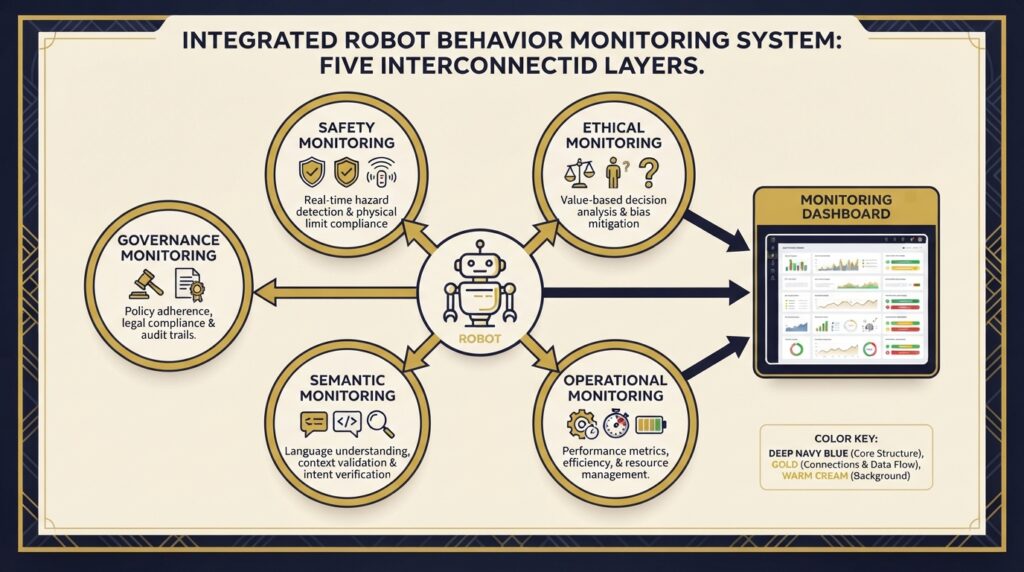
Figure 1 — Robot Behavior Monitoring Framework
This figure 1 illustrates the five-layer robot behavior monitoring framework — Safety Monitoring, Ethical Monitoring, Operational Monitoring, Semantic Monitoring, and Governance Monitoring — working together to ensure righteous operation of embodied AI systems.
9.5 RI‑R Assessment Methodology
The Robot Righteousness Index (RI‑R) provides a quantitative measure of an embodied AI system’s righteousness. It assesses robots across the Five Pillars: Integrity, Justice, Stewardship, Wisdom, and Beneficence, with specific adaptations for physical behavior.
Purpose
Table 10 — RI‑R Assessment Purpose
| Purpose | Description |
|---|---|
| Assess Robot Righteousness | Evaluate whether embodied AI systems operate righteously |
| Identify Gaps | Identify areas where robot behavior falls short of righteousness standards |
| Track Progress | Measure improvement over time |
| Enable Certification | Provide a basis for robot righteousness certification |
Assessment Dimensions
This table 11 outlines the key assessment dimensions for the Robot Righteousness Index (RI‑R), organized by the Five Pillars.
Table 11 — RI‑R Assessment Dimensions
| Pillar | Assessment Dimension | Key Questions |
|---|---|---|
| Integrity | Honest Reporting | Does the robot accurately report its status and actions? |
| Integrity | Transparency | Are the robot’s capabilities and limitations clearly communicated? |
| Integrity | No Deception | Does the robot conceal errors or misrepresent its behavior? |
| Justice | Equitable Treatment | Does the robot treat all humans equitably? |
| Justice | Respect for Dignity | Does the robot respect human dignity in its interactions? |
| Stewardship | Physical Safety | Is the robot operated safely? |
| Stewardship | Human Oversight | Is there meaningful human oversight of the robot’s actions? |
| Wisdom | Physical Judgment | Does the robot make safe and prudent physical judgments? |
| Wisdom | Risk Assessment | Does the robot assess and avoid physical risks? |
| Beneficence | Human Well-Being | Does the robot’s physical actions promote human well-being? |
| Beneficence | Environmental Responsibility | Does the robot consider its environmental impact? |
Assessment Methodology
This table 12 outlines the step-by-step process for conducting a Robot Righteousness Index (RI‑R) assessment.
Table 12 — RI‑R Assessment Process
| Step | Activity | Output |
|---|---|---|
| 1 | Scoping | Define the robot system, deployment context, and scope of assessment |
| 2 | Safety Testing | Conduct physical safety testing in standardized scenarios |
| 3 | Behavior Monitoring | Monitor robot behavior over a defined period |
| 4 | Semantic Evaluation | Evaluate semantic safety using benchmarks like ASIMOV |
| 5 | Ethical Review | Review robot behavior against ethical standards |
| 6 | Governance Review | Review governance mechanisms and accountability structures |
| 7 | Scoring | Calculate RI‑R score across all dimensions |
| 8 | Reporting | Document findings and recommendations |
RI‑R Score Interpretation
This table provides score interpretation guidelines for the Robot Righteousness Index (RI‑R), including ratings and descriptions.
Table 13 — RI‑R Score Interpretation
| Score Range | Rating | Description |
|---|---|---|
| 80–100 | Righteous | Exemplary robot behavior; righteousness is embedded in all aspects of operation |
| 60–79 | Proficient | Solid robot behavior; righteousness is generally demonstrated but could be strengthened |
| 40–59 | Developing | Foundational behavior in place; significant improvement needed |
| 20–39 | Emerging | Basic behavior patterns exist; robot behavior needs substantial improvement |
| 0–19 | Unassessed | No systematic righteousness assessment has been conducted |
9.6 Robot Righteousness Maturity Levels
RAGF defines six maturity levels for embodied AI systems, tracking their progression from basic safety to fully righteous autonomous operation.
This table 14 defines the six maturity levels for embodied AI systems, from unassessed to righteous, with corresponding RI‑R score ranges and key characteristics.
Table 14 — Robot Righteousness Maturity Levels
| Level | Name | RI‑R Score Range | Key Characteristics |
|---|---|---|---|
| 0 | Unassessed | N/A | No righteousness assessment has been conducted |
| 1 | Foundation | 0–19 | Basic safety mechanisms in place; minimal righteousness governance |
| 2 | Developing | 20–39 | Safety and ethical considerations are being implemented |
| 3 | Proficient | 40–59 | Most righteousness principles are assessed and monitored; human oversight in place |
| 4 | Advanced | 60–79 | Righteousness is actively cultivated; robots can learn from experience |
| 5 | Righteous | 80–100 | Fully righteous autonomous operation; continuous improvement; demonstrable alignment |
The Five-Level Maturity Model for Embodied AI
Research has proposed a maturity model for safe and trustworthy embodied AI that aligns closely with RAGF’s levels:
Table 15 — The Five-Level Maturity Model for Embodied AI
| Level | Research Model | RAGF Equivalent | Description |
|---|---|---|---|
| L1 | Alignment | Foundation | Basic resilience through large-scale data-driven training to align agent behavior with human values and safety norms |
| L2 | Intervention | Developing | Resilience under supervision through explainability and human oversight, ensuring humans remain in ultimate control |
| L3 | Mimetic Reflection | Proficient | Basic recovery where agents learn to perform tasks safely by imitating and internalizing verified safe behavior templates |
| L4 | Evolutionary Reflection | Advanced | Adaptive recovery where agents possess self-improvement mechanisms, autonomously learning and optimizing safety strategies through continuous interaction with the physical world |
| L5 | Verifiable Reflection | Righteous | Fully verifiable safety where agents can demonstrate and prove their safety and righteousness |
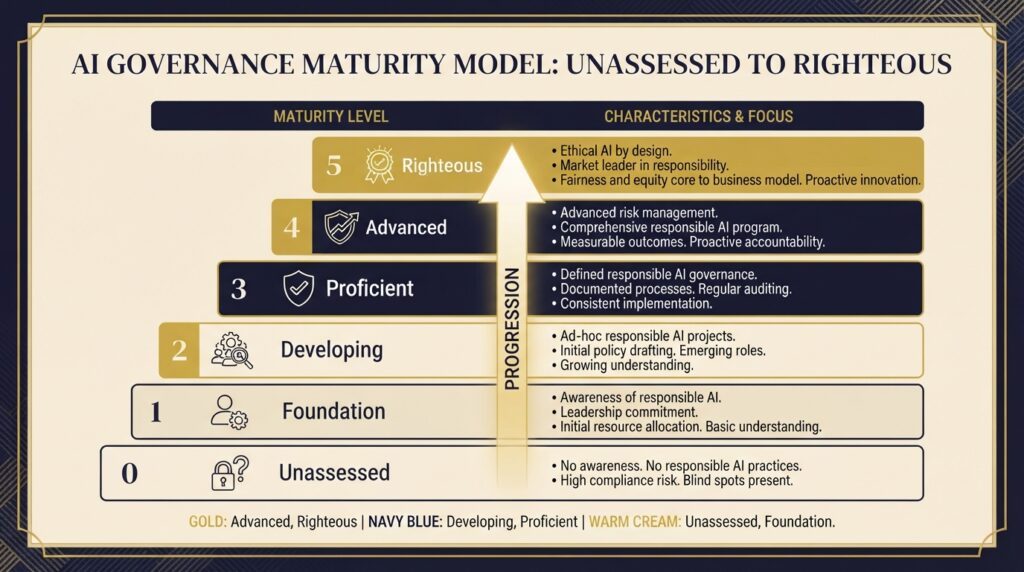
Figure 2 — Robot Righteousness Maturity Levels
This figure presents the six maturity levels for embodied AI systems, from unassessed (Level 0) to righteous (Level 5), showing the progression from externally imposed safety to internally generated righteousness.
References
Brewer, M. A. (2025). Guardian Sentinel (GS): A governance-first framework for embodied protection systems (Version v1). Zenodo. https://zenodo.org/records/17084975
Ghoshal, A., Brandão, M., Abu-Salma, R., & Modgil, S. (2025). Embodied AI at the margins: Postcolonial ethics for intelligent robotic systems. In AAAI/ACM Conference on Artificial Intelligence, Ethics, and Society (AIES) (Accepted/In press).
Oak Forest Robotics. (2026, July 26). The Robotics Guardian Standard: An open conformance framework governing privacy, safety, and human dignity for robots. https://oakforest.co/robotics-guardian-standard
Sermanet, P., Majumdar, A., Irpan, A., Kalashnikov, D., & Sindhwani, V. (2025). Generating robot constitutions & benchmarks for semantic safety. In Proceedings of The 9th Conference on Robot Learning, 305, 4767–4823. https://proceedings.mlr.press/v305/sermanet25a.html
Tan, X., Liu, B., Bao, Y., Tian, Q., Gao, Z., Wu, X., Luo, Z., Wang, S., Zhang, Y., Wang, X., Lu, C., & Zhou, B. (2025). Towards safe and trustworthy embodied AI: Foundations, status, and prospects. https://openreview.net/forum?id=Eu6Yt21Alv
What breaks embodied AI security: LLM vulnerabilities, CPS flaws, or something else? (2026). ScienceDirect. https://www.sciencedirect.com/science/article/pii/S266729522600022X